
Preparing Unstructured Data for AI and RAG
Preparing unstructured data for AI means making your files discoverable, classified, and governed before they enter a RAG or LLM pipeline. Inventory where files live. Detect what sensitive data they contain. Apply sensitivity and retention rules. Route or redact risky content. The model gets grounded on data you actually trust.
What "AI-ready data" means
AI-ready unstructured data is content that has been inventoried, classified for sensitivity, cleaned of redundant, obsolete, and trivial files, and gated by policy. Everything an AI system can retrieve is known, permitted, and current.

The AI readiness checklist

Discover
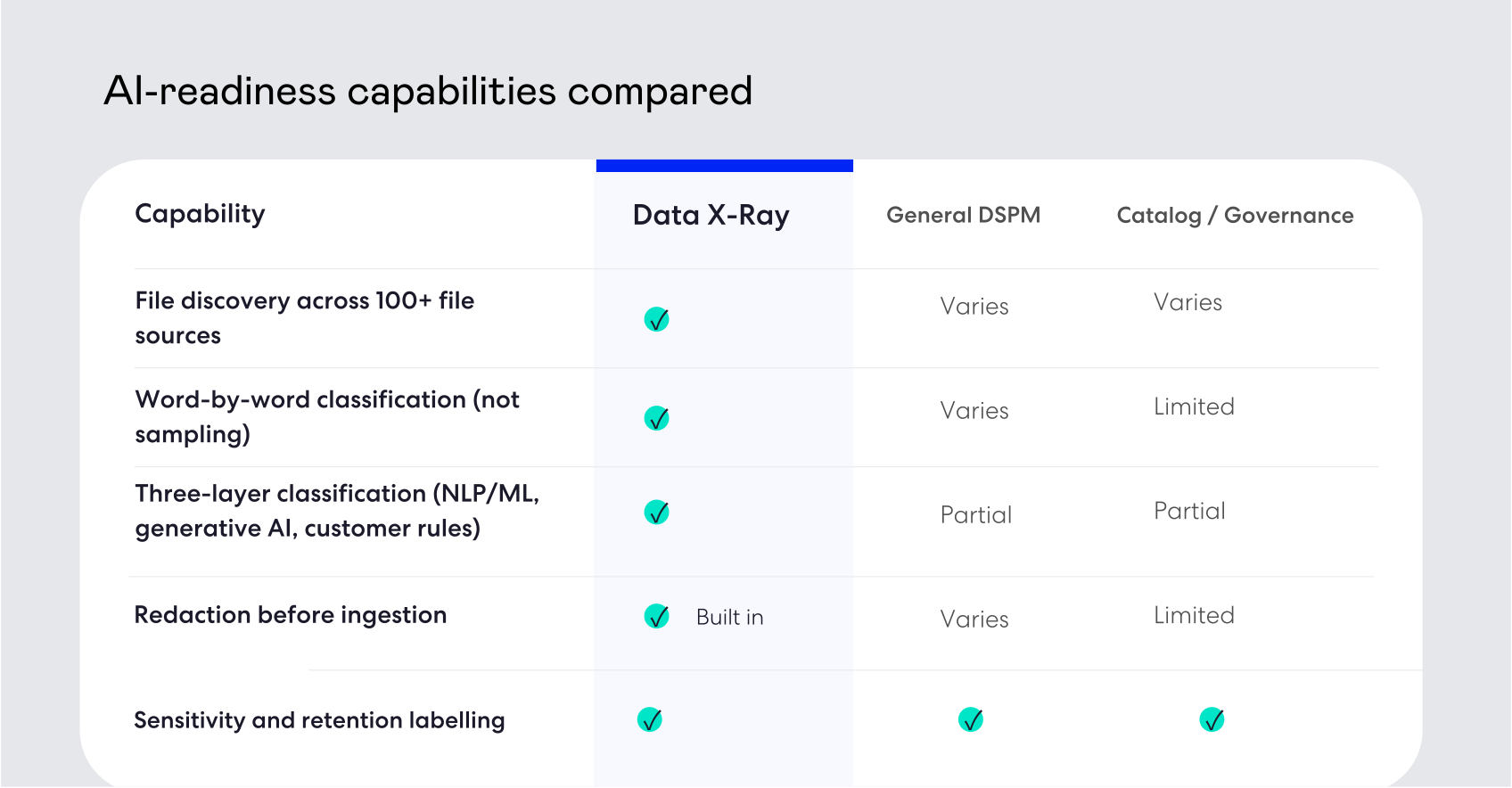
Connect to every source and build a complete inventory of your files. Data X-Ray natively connects to 100+ sources including SharePoint, cloud storage, and databases.

Classify
Detect PII, PCI, and business context at the document level. Not by keyword guessing.

De-risk
Route or redact sensitive files before they're embedded or indexed. Drop redundant, obsolete, and trivial files so the model isn't grounded on junk.

Govern
Apply retention and access policy. Keep an audit trail of what was made available to AI and why.

Where classification fits in a RAG pipeline
In a typical RAG pipeline, content moves through six stages: source → extract → chunk → embed → index → retrieve. Classification belongs before embed and index. If files are classified and gated up front, the vector store only contains content that is permitted and current. Retrieval can respect sensitivity labels from the start. Classifying after indexing means sensitive data is already retrievable before any control applies.
How Data X-Ray makes data AI-ready
Data X-Ray discovers, classifies, and redacts files across your estate using a three-layer architecture: NLP and machine learning for semantic precision, generative AI for document-level context, and your own rules for sensitivity and business logic. It then governs which files are eligible for AI use. Metadata is enriched so RAG and LLM applications can consume classified, policy-gated content.